miércoles, 8 de julio de 2015

Visa madness part 2: CR-1/IR-1 and I-864 (Direct Consular Filing in Peru)

In part 1 I talked about my experience submitting the I-130 directly through USCIS at the US embassy in Lima. After waiting a nail-biting 6 weeks for the response, we received an email that our petition had been approved and had been sent to the Consular Section (the Department of State) for processing. Hoorah! One hurdle down. In this post, I'll talk about the second and final step of the immigrant visa process through Direct Consular Filing in Lima.

Here is an overview of what this step entails:

1. A medical exam of the intending immigrant: this is a required step, and I guess it's to ensure that the person does not have any communicable diseases that could be considered a public health threat, like tuberculosis. More on this below.

2. CR-1 / IR-1 application: this is the form and the accompanying documents for the intending immigrant.

3. I-864 affidavit of support: this is the form that the US petitioner submits, showing sufficient income to ensure that the immigrant doesn't become a burden on public assistance. It also establishes the petitioner's domicile, which typically means that you live in the US. Since everyone applying for DCF lives in Peru, this is a bit trickier but nothing to worry about! I'll cover this in detail below.

4. The consular interview. This is the final step, and I think it deserves its own post so I'm going to write about it separately.

After you get the confirmation email from USCIS, you wait. Supposedly, you will receive a packet in the mail from the Department of State here in Lima with instructions for how to proceed. Do not, under any circumstances, sit on your hands until you get this packet! Ours arrived a scant three days before our interview, and thankfully we had already been in contact with the embassy beforehand so we were prepared. I recommend contacting them about three weeks after hearing from USCIS.

You should ask: A) whether an interview date has been scheduled yet, B) whether you can go ahead with the medical exam, C) whether your spouse has been assigned a case number yet (it's a code that should start with LMA followed by a bunch of numbers), and D) how to proceed. In the title of your email, you should write "IV inquiry: (spouse's last name), case number unknown" (until they provide the case number). The first paragraph must contain your full name and your spouse's (the applicant's) full name, the type of visa (IR-1 or CR-1), and your contact information. They say they should reply in about 5 business days, but sometimes they might take longer. Don't be afraid to re-send the email if you haven't heard from them in 6-7 days.

Consular section email: limaiv@state.gov

The Immigrant Visa unit from the embassy will send you instructions about the medical exam and documentation to gather for the interview. DO NOT schedule a medical exam until they tell you that you can, because you need your case number for the appointment.

The medical exam

The embassy will send you information with the doctors who have authorization to perform the medical exam (currently, there are three, all in Miraflores). You should call and schedule an appointment, and you will receive an email with instructions about what to bring. For adults, the exam costs S/.650 and this needs to be paid ahead of time at a bank and then you bring the receipt on the day of your appointment. Hold on to the receipt like your life depends on it, because when I asked at the bank they said that if anything happens they can't issue another receipt. You will need to bring your spouse's passport and interview letter on the day of the exam. (We did not have our interview letter yet, but brought the email showing my husband's case number and the instruction to schedule the exam.)

The doctor will take your medical history and do a general exam. He or she will recommend any vaccines that you are missing. If you want to get that out of the way the same day, bring cash to pay for the vaccines. My husband had to get four vaccines, and they came out to around S/.450 altogether so bring enough cash (they don't accept credit cards).

After the general exam, you have a blood test and a chest x-ray. This is at the AngloAmericana clinic, even if your appointment is at a different clinic (like ours was), so I recommend scheduling the appointment with a doctor at AngloAmericana to avoid the hassle of going to two different places. 

About a week after the exam, you can pick up the results. It's important that you do not open the packet, but bring it to the interview still sealed.

A note: it's important to be honest about any medical conditions, because lying in a visa process is considered fraud and if the government finds out, you won't be getting the visa and you might be banned from applying in the future. However, remember that the US is extremely intolerant of drug use so I urge you to consider your answer very carefully when you answer that part of the questionnaire.

Immigrant visa application (CR-1 / IR-1)

What do those letters mean and how do you know which one applies to you? CR stands for "conditional residency" and if you have been married to your spouse for less than two years, you are applying for a conditional residency visa. If your visa is approved, you will get a two-year green card, after which you will have to apply to have conditions removed. IR means "immediate relative" and applies if you have been married for more than two years. Upon approval you will be granted residency for ten years, after which you can renew your green card.

These are the documents the applicant (your foreign spouse) needs:

-original birth certificate (not a copy), legalized by RENIEC
-original marriage certificate, legalized by RENIEC
-original divorce or death decree if your spouse was married before, legalized by RENIEC
-police records (antecedentes policiales) for Peru and any other country your spouse has lived in for more than one year
-court records (antecedentes judiciales a nivel nacional)
-prison records (antecedentes penales)
-military records, if your spouse served in the military (antecedentes militares)
-2 passport photos
-online form DS-260. You can only fill this out after you have received your LMA case number. Print the confirmation code and bring this on the day of your interview. I did not print this, assuming that they should have access since it was an online form. While everything worked out in the end, we had some very tense moments - not what you want the day of your interview!

The affidavit of support (I-864)

This form is filled out by the US citizen spouse, and it fulfills two purposes. The first is to demonstrate sufficient income to support your spouse. If you don't meet the income requirements (I didn't), you can use a joint sponsor and this will in no way be counted against you. You just need to follow the instructions on the form and attach your tax return for the most recent year. The second purpose is to demonstrate that you maintain a US domicile, i.e. that you live in the US. However, for US citizens living abroad you may show 'an intent to re-establish domicile'.
 
Establishing domicile

There are many ways to show domicile. I used a mix of factors showing that I had maintained my US domicile, and that I intended to re-establish domicile. Obviously, if you are applying to live in the US it should be fairly obvious that you do intend to live there, so I wouldn't worry too much about this. Here is the official list of requirements that they will be looking at:

9 FAM 40.41 N7.1-2 Establishing the Existence of a U.S. Domicile (CT:VISA-1995; 06-06-2013) 
a. A petitioner living abroad not meeting the criteria in 9 FAM 40.41 N7.1-1 who wishes to qualify as a sponsor must satisfy you: 
(1) That he or she has taken steps to establish a domicile in the United States; 
(2) That he or she has either already taken up physical residence in the United States or will do so concurrently with the applicant;
(3) The sponsor does not have to precede the applicant to the United States but, if he or she does not do so, he or she must at least arrive in the United States concurrently with the applicant; 
(4) The sponsor must establish an address (a house, an apartment, or arrangements for accommodations with family or friend) and either must have already taken up physical residence in the United States; or 
(5) Must at a minimum to satisfy you that he or she intends to take up residence there no later than the time of the applicant’s immigration to the United States. b. Although there is no time frame for the resident to establish residence, you must be satisfied that the sponsor has, in fact, taken up principal residence in the United States. 
Evidence that the sponsor has established a domicile in the United States and is either physically residing there or intends to do so before or concurrently with the applicant may include the following: 
(1) Opening a bank account; 
(2) Transferring funds to the United States; 
(3) Making investments in the United States; 
(4) Seeking employment in the United States; 
(5) Registering children in U.S. schools; 
(6) Applying for a Social Security number; and 
(7) Voting in local, State, or Federal elections. 
c. If a petitioner cannot satisfy the domicile requirement, the petitioner fails to qualify as a “sponsor” for the purposes of submitting Form I-864, and a joint sponsor cannot be accepted and the applicant must be refused pursuant to INA 212(a)(4). Without a properly executed I-864, signed by a sponsor (the petitioner) who is “domiciled” in the United States, in visa cases which require an I-864, then an immigrant visa cannot be approved.


Here's what I submitted:

Evidence that I have maintained domicile in the US:
-current driver's license
-voting registration card
-bank statements
-retirement account statements

Evidence of steps taken to take up residence in the US:
-LLC creation documents (I registered a company in the US, but you can show 'attempts to seek employment': job applications, emails to potential employers, interview records, etc)
-lease agreement: I signed a 'contract' with my parents stating that we were going to live there (even though I don't actually intend to live there). It's required to show living arrangements, as stated in the official text above, but nobody says you have to actually live there.

Basically, show them that you are serious about establishing yourself in the US: a place to live, a job (or at least evidence that you're looking), a US bank account, and any other ways you can think of to demonstrate how you are going to settle in to your new life.

I also submitted a cover letter / affidavit which you can find below:

Claire Ryan
Social security no: xxx-xx-xxxx
FORM I-864
No. 15 Country of Domicile

I, Claire Ryan, am currently residing in Peru with my spouse, JV. Below you will find a list of attached documents to show that my principle residence is in the US and the steps that I have taken to return to the US with my family.

Steps I have taken to maintain US Domicile:
• Maintained my XX voter registration
• Maintained my bank account at XX Bank
• Maintained my XX drivers license
• Maintained my US retirement fund through XX
• Maintained my US investment account with XX

Supporting Documents for the above steps I have taken:
• Voter registration card showing permanent US address
• Bank statement showing permanent US address
• XX drivers license showing permanent US address
• Retirement fund statement showing permanent US address
• Mutual fund statement showing permanent US address
 

Steps I have taken to return to the US to take up residence:
• Made arrangements for us to have a house to live in
• Set up an LLC with the intention of doing business in the US

Supporting documents for the above steps I have taken:

• Lease agreement for our house
• LLC creation documents
• Invoice from lawyer for creation of LLC

I declare that I intend in good faith to re-establish my domicile in the United States no later than the date of spouse's admission into the US.

I certify under penalty of perjury under the laws of the United States that the statements in this letter and all accompanying evidence are true and correct.


Signature: ____________________________________________________

Date: ______________________
NAME


Now that all the documentation is taken care of, all that's left is the interview itself.

martes, 23 de junio de 2015

Visa madness part 1: the I-130 (Direct Consular Filing in Peru)

Ok, so the title is a bit of a misnomer. I couldn't have been happier with how our process turned out. Nobody applies for a US visa thinking it'll be a quick and painless process, but I was quite pleasantly surprised by how smooth our Direct Consular Filing process was from start to finish - only three months! Compared to the year-long wait times for the National Visa Center in the US, filing directly with the embassy is a huge advantage. Why wouldn't everybody do it this way? Well, because not everybody is eligible.

To be eligible for Direct Consular Filing in Peru, you must:
  • be legally married (the US does not recognize common-law marriages).
  • have lived in Peru for at least 6 months and currently reside in Peru (for the US citizen petitioner).
If you are not married, or if the US citizen/permanent resident doesn't live in Peru, you can't apply for an immigrant visa through the embassy and you must apply through the National Visa Center in the US. You should probably find a more reliable source of information than this blog, and/or contact a lawyer.

There are two steps to the application: the I-130 petition by the US citizen or resident (processed by US Citizenship and Immigration Services), and the immigrant visa application once the I-130 has been approved (processed by the Department of State). I'm only going to talk about the I-130 in this post.

They will be looking at two things in this step: A) is the petitioner eligible to submit the petition on behalf of his/her spouse? and B) is the marriage legitimate? For the first point, this means the petitioner must be a US citizen, and for DCF through the Lima embassy you have to demonstrate that you reside in Peru and have for at least 6 months. (Under normal circumstances it's possible to submit a petition if you are a permanent resident; however, living in Peru for over 6 months means you have lost your US residency.) I'll talk about how to prove the legitimacy of the relationship below.

Required documents:

-Copy* of original marriage certificate.
-Copy* of divorce decree or death certificate in case of previous marriages.
-Copy* of the petitioner's US birth certificate, passport biodata page, or naturalization certificate (to prove citizenship).
-Copy* of the beneficiary's passport biodata page.
-Copy* of the beneficiary's birth certificate.
-Form G-325A for the petitioner (the US citizen) and the beneficiary (the spouse).
-One passport photo of both the petitioner and the beneficiary. Here is a link to passport photo guidelines.
-Form I-130, completed and signed.
-Evidence of Peruvian domicile (see below)
-Evidence of a bona fide relationship (see below)

*USCIS only requires photocopies, but you may be asked to show the original so you should bring it when you submit the I-130 packet. It's better to be safe than sorry!

A note about translations: According to USCIS, all documents not in English need to be translated. I found that if the documents were in Spanish they did not ask for a translation, but again it's better to be safe than sorry. But don't run out and hire an official translator yet. You or a friend can translate the documents if you know Spanish.  You simply need to attach an affidavit for each translation stating that you are fluent in both languages and that it is a true and accurate translation, with your signature and the date.

Evidence of Peruvian domicile

According to the USCIS document, there are a few ways to show you have Peruvian domicile. However, when I showed up with a good number of these pieces of evidence they did not accept my petition and told me to go to Migraciones in Breña and get the Movimiento Migratorio (your entry/exit record in Peru). It's great to include other proof, but that seems to be the golden ticket; in fact, they did not even accept the photocopy of my carnet. They told me it was because you can have a carnet, lease, work contract etc and still be out of the country for long periods of time; the Movimiento Migratorio is the only solid proof that you have been physically present in Peru for at least 6 months. So, here is the list of what you need to fulfill this requirement.

Required:
-Movimiento Migratorio: can be obtained very quickly at Migraciones in Breña. No appointment is needed, and you do not need to go yourself - anyone can request this without a carta de poder. Pay at the Banco de la Nación inside - it was around S/. 20-30. I think they only had hours in the morning to do this, but I don't remember exactly so it's better to call if you're not sure.
-Copy of carnet de extranjería if you have it, just in case. (I believe it's possible to apply without having a carnet, but I'm not certain.)

Optional but helpful:
-Work contract/job letter
-Cell phone or utility bills
-Lease
-Insurace policies
-Bank statements from Peruvian bank account

Evidence of bona fide relationship

This is one of those times where it's better to err on the side of too many pictures and too many documents rather than too few. Keep in mind that they will judge the veracity of your relationship based solely on the evidence you provide. Your friends know you are a sweet and committed couple, but these people are strangers who don't know you and whose job it is to assume your relationship is fraudulent until you prove them wrong.

As stated on the I-130, these are the types of evidence that demonstrate a bona fide marriage:

-Proof of joint ownership of property
-A lease showing you live together
-Proof of co-mingling of financial resources (i.e., a joint bank account or filing taxes jointly)
-Birth certificates for any children you and your spouse have together
-Affidavits by friends, family, or acquaintances (see the I-130 for more information on this.) This is probably the weakest of all evidence, so it's not usually necessary unless you are really thin on other evidence.
-Any other relevant documents to show an ongoing marital relationship. This means lots and lots of photos, trip receipts, Skype or email conversations, cards from friends and family addressed to both of you, etcetera.

Here is what I submitted in my petition:

-Marriage certificate.
-Photos from our wedding, including shots of family members/guests posing with us.
-Copy of our wedding invitation.
-Congratulations card from friends, addressed to both of us.
-Photos from prior trips and events in our relationship (best to include a variety, and include photos with friends/family. I've heard that photos with 'gringos' in them are preferred although I can't verify the veracity of this statement).
-Bank statements from our joint bank account, opened five months before the petition date.
-Lease showing both our names, signed a year and a half before the petition date.
-Health insurance policy showing both our names, opened a year before the petition date.

Some notes:

-We brought at least 40-50 photos, and the woman looked through them and chose six to make a copy of. I got to keep all the originals but I wouldn't count on that.

-We had been married only a few weeks before submitting the petition, so we had to submit evidence of our ongoing relationship before that. Whether you've been married a long time or short time, be sure to submit evidence of an ongoing relationship (trips, birthday/holiday celebrations, leases etc showing your life together for the duration of the relationship).

-If you live together, you probably don't need to submit Skype or email conversations. If you spent a long time apart either before or during your marriage, it might be a good idea.

Dropping off the petition at USCIS

You can drop off the petition at USCIS in the US Embassy on Tuesdays and Thursdays from 9-11. Obviously, you have to bring your original passport to show at the gate or they won't let you in. Despite what some misinformed security guards might tell you, you do NOT need an appointment to drop off the I-130 petition. You should get in the shorter line on the right-hand side of the embassy (the very long line on the left is for visa appointments - you'll have that fun experience in the next step).

Although USCIS hours begin at 9, they will let you enter before 9 o'clock, and believe me, you want to be there early. Plan to be in line outside the embassy by at least 8:30. The first time, I went about ten minutes to nine and I was number 17. I waited for two hours on extremely uncomfortable benches. The second time I made sure to get there early, and I was number 2. I was walking out of the embassy by 9:30.

After you go through security at the door (important: be sure to read my note on that below!), go to the USCIS area of the embassy, which should be clearly marked. There, you should take a blue card with a number on it, then wait for your number to be called.

IMPORTANT: New security policy at US embassy in Lima

As of April 2015, the embassy has implemented a new and extremely draconian security policy. You can see full details on the embassy website. There are some obvious items like sharp objects or flammable liquids, but here are the new restrictions below.

Newly prohibited items:

-cell phones
-any device with a battery
-electronic devices such as flash drives (USB drives) and electronic car keys, cameras, laptops, etc
-ANY purse or bag larger than a small clutch or travel wallet. See the website for exact dimensions, but it is quite small.

The embassy used to store these items at the security desk, but they don't do this anymore. Obviously, this has annoyed and inconvenienced many. Many of the copy places across the street from the embassy now offer 'lockers' to store your things, but the one I went to tied up my purse in a plastic bag, wrote my name on it, and placed it behind a chair. So, use at your own risk and don't bring anything of value.

Payment

When you go to the window to drop off your forms, the person helping you will sort through your documents and keep the ones that are relevant for the petition (don't freak out if they reject some documents - they know what they need and what they don't). Then they will give you a form to take to the other side of the embassy to pay the $420 filing fee. This is the building in front of the big American flag - when you go in, go through the door on the left-hand side or ask the security guard.

In the USCIS document, it says this must be paid in cash; however, they do accept Visa cards. Go to the payment window to pay, and they will give you a receipt for your records and an official receipt to bring back to the USCIS window. You do not need to take another number, just lurk around until the person who is being helped is finished, then go up to the window and drop off your receipt. You should be all set!

After dropping off your petition

 The person helping you will take your email address and tell you that you will receive an email from USCIS in a certain number of days. The USCIS document says 5-10 business days, but they told me 15 business days (3 weeks). That would have been really swell, but it actually took twice as long - about a month and a half. When you receive the email, you can have a celebratory drink, relax a little bit... and prepare for more waiting. More on that in Part 2!

I hope this information was helpful. Please remember that this is based only on my personal experience, and none of this is qualified legal advice. For any questions, I recommend contacting USCIS in Lima directly and/or an immigration lawyer.

USCIS email contact: peru.uscis@uscis.dhs.gov

Here is the contact information for the lawyer I used. He lives in Lima, and I found being able to meet face-to-face extremely helpful.

Matthew Anderson - email: matt@andersonvisa.com


lunes, 16 de febrero de 2015

Getting Married in Peru: The Wedding!

What a week! I am now a married woman, since Jorge and I tied the knot last Thursday. It was a wonderful week, if a bit stressful, and some part of me still can't believe that I'm married.


We had a civil ceremony, which is the Peruvian equivalent of getting married at City Hall. The difference is that here, everyone is required by law to get married at the City Hall, and then you can have a religious ceremony if you want. Most Peruvians have a simple civil ceremony, and then have the big religious wedding at a later time when they can afford to throw the kind of party they want. Some couples put this off so long that to me it really seems like more of a renewal of vows (after 5 years you can hardly call it a wedding surely), but to each his own I guess. Jorge and I aren't planning to wait that long!

It was great to have my mom, my sister and my brother in town for the wedding . Even though it was a busy few days, we managed to get some tourism in and eat at some great restaurants. The night before the ceremony, all the friends and family went out for drinks so everybody could meet each other before the actual wedding. Unbeknownst to us, the next day was Pisco Sour day, so there was a film crew at the bar and they interviewed me. So, in addition to getting married, that weekend was my Peruvian TV debut. (Please don't look it up.)


The morning of the wedding, the ladies had our hair and makeup done in the hotel and then it was off to get married! Our wedding was at 2 in the afternoon so it was peak sun time. The poor men, including my dear husband, were suffering in their suits, and I wasn't faring much better even in my knee-length dress. We had the photo shoot before the wedding, so Jorge and I went off to have pictures taken while our guests chatted.


Finally, we all went into the 'marriage hall' where there was a desk and four chairs at the front of the room for the bride and groom and their witnesses. The chairs had their back facing the guests which I found kind of strange. The ceremony itself was short and sweet, and consisted of the officiant reading the articles of Peru's constitution pertaining to the rights and responsibilities that go along with marriage. It's some pretty romantic stuff. Then we all had to sign the marriage documents and we were married! We decided to exchange rings and read our own vows in order to make the ceremony more personal - definitely my favorite part. The whole thing lasted between five and ten minutes, and then it was time for the toast!


After about a million more pictures and some champagne, we all went to a restaurant to eat. At this point, due to the heat, the anticipation and excitement of the day, and the fact that I hadn't eaten since breakfast, I was about ready to keel over from hunger and exhaustion. After we had a delicious meal and a cold beer, it was time to say goodbye to the guests and go back to the hotel. I shared a cab with my family to their hotel while Jorge followed in a separate taxi - only four people can fit in one cab, at least for long rides. We hung out a bit there and looked at pictures, and then Jorge and I made our way to the hotel we had reserved for that night to take a catnap before dinner. The hotel was really fancy - thanks Groupon for making that happen.

All in all, a successful wedding! It was great to finally meet Jorge's family and to be able to show my family around a little bit. It would have been nice to have my father and my brother Tom in town, but that's the rub when you get married so far away from home.

I couldn't be more excited to start my life together with the amazing man I married. In fact, I'm so excited that I'm going to stop writing this and go and tell him again how happy I am with him.


domingo, 15 de febrero de 2015

Getting Married in Peru: Paperwork and Preparations

 Jorge and I got married last Thursday! It was a simple ceremony, but the whole thing was really nice especially because my family was able to come down for it. But I'm getting ahead of myself - the next post will be about the actual wedding, but this post is about the paperwork side of things.

Getting married in Peru is surprisingly easy compared to other official government processes. In terms of paperwork, it's much less burdensome than getting your carnet de extranjería (residence permit), requiring fewer documents and fewer steps overall. And the greatest part is, you don't have to pay anything at the Banco de la Nación, Peru's central bank that always has lines around the block. That said, nothing in Peru is ever easy peasy lemon squeezy, and we did have a few hiccups before finally sorting everything out.

Finally, making things official!

Every district has slightly different requirements, but here were the requirements for Surco:

1. Official birth certificate, issued in the last three months and apostilled (if you are from a country that is a Hague Convention signer)
2. Certificado de soltería, or a sworn statement of singlehood. You can get this from the U.S. Embassy (and pay a bundle) or in the U.S. county where you have permanent residence. If it's the latter, then it also has to be apostilled. I believe this also has to be less than three months old.
3. The two documents above must be translated by an official translator licensed by the Ministerio de Relaciones Exteriores (Ministry of Foreign Affairs), then taken to the Ministerio to get the translation 'legalized'. (I guess they don't trust their own translators?)

Here's a list of official translators by district: http://www.rree.gob.pe/servicioalciudadano/Documents/Listado_Ingles.pdf

4. A copy of your partner's birth certificate.
5. A certificate from the district's clinic - you have your blood drawn, they take an X-ray, and then you go back the next day where they 'counsel' you and give you your certificate. Supposedly, they talk to you about pregnancy planning and STDs, but they just explained our blood types and that was it.
6. A carnet-sized photo of each person, which can be taken at any photo store and most supermarkets.
7. A copy of your passport or carnet (more on that below) and copy of your partner's DNI (national identity card), both notarized.
8. You will also need two witnesses for the wedding, who should go with you to fill out the paperwork and bring a copy of their carnet / DNI.
9. Finally, the district will issue a marriage announcement that can be published in any newspaper. You have to buy the newspaper and bring in the entire page (no cuttings) with the marriage announcement to finalize your paperwork.

I have no idea what the administrative costs are to get married in the US, but here it's not too bad. The documents you need as a foreigner and the translation will probably be the most costly thing about it. From what I can remember, here were the costs of each step:

My birth cert and apostille were about $25 together, plus express shipping to my home state;
The record search and apostille for my certificado de soltería were $10 in total (but if you go to the US Embassy in Lima it'll cost you $30 or more);
The translation for both documents was S/.160 (about $50), but I was quoted much higher prices by other translators so shop around!;
The legalization fee was S/.33 per document, a total of about $20 (the costs add up for these documents for foreigners as you can see);
The medical exam was S/.35 per person, or about $10 per person;
The wedding announcement was S/.45, or about $15;
The fee for the municipality was somewhere around S/.200 ($70) since we were both residents of Surco and we had the ceremony during normal business hours. This included an extra half hour for a toast in the room where they do the weddings;
Plus a lot of money spent on taxis to and from the various places we needed to be.

You need some additional documents if you are divorced or widowed, but that's about it. Doesn't sound too bad, does it? The tricky part is in the fact that I have not once, ever, received correct information here the first time I asked. So you need to constantly be asking and double-checking to make sure you actually have all the requirements. For example, I was told using my passport would be preferable to using my carnet. I was doubtful, but since the lady insisted so many times that that was indeed correct, I used my passport number on the health certificate. Then, when we went to present our documents, she asked why my passport had no exit date written on my last entrance stamp. I pointed out that it was because I had entered with my carnet and therefore was allowed to be here until that was no longer valid. She frowned and told me that if there was no date on the passport stamp, I had to use my carnet. Cue incredulous look and strong desire to throw things. So we had to go back to the clinic and have them re-issue the document, and then return to the district office before they could reserve our wedding date. In the grand scheme of things, not such a big deal, but I was pretty annoyed since I had specifically asked this very question.

So there you have it! If you can manage to do all that without losing your cool at least once, then marriage should be a breeze.

domingo, 17 de agosto de 2014

La Feria Del Hogar

I'm just now getting around to writing about Jorge's and my experience at the new Feria del Hogar because I've been too busy I'm really good at procrastinating. There's been a lot of buzz, because it used to be the most beloved and exciting event of the year. Before the advent of modern shopping malls and the internet, it was the place to ooh and aah over the newest advances in technology and buy the latest housewares, as well as a place for the kids to go on carnival rides and stuff themselves full of cotton candy (presumably in that order).

Obviously, I wasn't here the first time around so I can't compare this year's version to its past iterations. But from all I've heard and read, it just doesn't compare to the original. There didn't seem to be too much excitement about it, and judging from the amount of people who were there on the day we went (a Saturday, on a holiday weekend), I don't think there will be a repeat event next year.

It just wouldn't be a festival without smoked pork.

The Feria was organized into large tents, with the concert space at the back and the carnival rides in the middle. There was art, clothing, housewares, a food expo, and a couple other things, but most of it was the same sort of stuff that you can find at other festivals or around town. The art was nice, but the clothes and jewelry were for the most part cheaply made and widely available in Lima; in other words, nothing special. The food tent obviously had a lot of great things, but nothing new. I got some organic chocolate and managed to resist buying a delicious raspberry liqueur.

There were a few interesting things on display, such as a mineral exhibit showing the minerals that can be found in Peru (silver and gold look pretty gnarly in their natural form). There was a nice but small display of traditional marinera dance outfits from different regions of Peru, and a short but well-done video looking back on the history of the Feria. I think most of the people there enjoyed the trip down memory lane, and for first-timers like me it was nice to have some perspective on the history.

 Traditional marinera outfit from Lima.

One of the highlights of the fair was the carnival rides. Peru has no permanent amusement parks, so any opportunity to go on rides is met with anticipation. Well, this was no Six Flags, but there were still some impressive lines and a couple of exciting rides. They say you become your mother, and if my stomach's reaction to the swirling rides is any indication, I can say that it's true. I remember when I was a kid going on all the rides at Valleyfair and swearing that I would never get motion sick when I got older. I didn't realize that "older" meant 26.  I think Jorge will be disappointed when we go to an amusement park and I have to wait for him from the sidelines.

 These guys had it in for me.

The crown jewel of the Feria, and perhaps the one thing that made it solvent, was the music. There was a great lineup of Peruvian and international artists, such as the British band James and salsa superstar Ruben Blades. We saw the Peruvian cumbia groups Los Destellos and Los Mirlos. There weren't many people there, even though so-called chicha music (the name for the unique mixture of Peruvian traditional influences and the cumbia rhythm) is very popular. However, the headlining artists attracted much larger crowds.

It's probably a good thing they're musicians and not fashion designers.

Then there was the food, which was a head-scratcher. There were rows upon rows of restaurants and booths, hundreds of chairs, and almost no customers in sight. The prices were steep and the offerings mediocre, especially with Mistura just around the corner. I had a pretty good paella, but it cost twice what it should have.

Overall, I was pretty underwhelmed. It was a fun way to spend an afternoon, but nothing out of the ordinary, and Lima has a lot of events and ferias. It would be a shame if the Feria's grand reopening closed after just one year, but I can't say I'd miss it too much.


lunes, 28 de julio de 2014

Peruvian Independence Day!

Today is Peruvian Independence Day. On July 28th, 1821, José de San Martín declared independence from Spain, and ever since then Peru has had a proud but turbulent history. Unfortunately for Limeños, Independence Day falls in the middle of winter, which means gray, wet, and cold weather, hardly an inspiring backdrop for patriotic speeches. Too bad San Martín couldn't have won a couple months earlier or a couple months later.

 Military parade against the gray July skies

Today, the president gives his State of the Union address to talk about the achievements of the past year and planned programs and improvements in the coming year. So far, president Ollanta Humala has made some lofty promises, such as educational reforms and increased investment in education and teacher training, health care coverage for all Peruvians and complete pre-and post-natal coverage for mothers and children, increased efforts to eradicate corruption within the government and police force, and measures to reduce poverty. The promised changes seem very positive, but the sheer scope of his promises seem to set him up to fail. In my opinion, it would have been more prudent to promise less and deliver more, but politicians will be politicians.

I want to believe that positive change is coming for Peru, yet it is hard to be optimistic in light of the corruption and ineptitude of the government in the past three years of this administration, and previous administrations before this. The best ideas aren't worth the paper they are written on if they aren't carried out well. So far, the Peruvian people also seem skeptical of these promises, inspiring tweets such as, "I wish I lived in Ollanta's Peru."

But enough of politics, let's get patriotic! Fiestas Patrias is a time to celebrate what Peru has to offer, and it has much to offer. Aside from its delicious food and famous pisco sours, Peru has a wealth of traditions and cultures that other countries lack. Every region has its own dress, its own music, its own traditions that go back generations. I love the textiles and handicrafts and will never get tired of browsing the markets for pretty things, or watching the Afro-Peruvian dances or the marinera. There is an endless list of things to appreciate about this country, and today I'm proud to say I live here.

The lively and colorful danzas afro

Unfortunately, Jorge can't drink right now (doctor's orders) so he won't be able to join me in raising a glass of Cusqueña beer or a pisco sour, but I know that his sentiments are the same. ¡Viva el Perú!


jueves, 17 de julio de 2014

Spending Holidays Far from Home

I've always been a fan of holidays. I don't go crazy decorating or bake crafty things from Pinterest, although I'm always game for a holiday-themed cocktail. Now, I love holiday decorations, I just don't like doing it myself. I let others around me make the effort and just enjoy looking at the fruits of their labor; I'm more of a passive holiday-enjoyer. I guess what I'm trying to say is that I like holidays a regular amount. Like everyone, I enjoy the time off and the long weekends, the once-a-year culinary delights and ensuing food coma, the whole hullabaloo. And I like the memories and the family traditions.

 No flags or lakes or family cabins this year. No happy dogs running around, no burgers and s'mores, and no card games.

Which is why spending holidays in a foreign country is weird. The traditions are different. Things look different. Your family's not there. And especially when it's a strictly national holiday (like the 4th of July), you don't get to enjoy other people's decorations. We've already established that I'm too lazy to decorate myself, so this year I felt a distinct lack of red, white, and blue around me. And that made me a bit sad. As far as I could tell, the U.S. Embassy in Lima didn't host any sort of celebration for citizens, and since I don't know too many Americans here I felt my patriotic stirrings deflate at the prospect of not celebrating the 4th. 

But then, Jorge and I received an invite to celebrate with some friends. Not just any friends, but my British friend Nilma and her husband Dom! We watched the World Cup game (in Spanish) and drank British beer. Not quite the holiday traditions that I'm used to, but it was great spending time in such good company and I felt immensely cheered up. After the game, we put on some Beach Boys and had a cookout, which felt slightly more patriotic.

The hostess with Jorge and me
 
While it wasn't quite the celebration I was used to, I ended up having a great time (and great beer - try Fuller's if you haven't already). Just goes to show that while holidays living abroad will always be different, they can be just as much fun.

miércoles, 9 de julio de 2014

The Terror of La Ducha Electrica

Anyone who has traveled in South America (and not stayed exclusively in luxury hotels) has run across this delight:


Yes, the electric shower. Mixing electricity and water sounds like a great idea, right? Electric showers are ubiquitous here due to their low cost and the limited space they take up. The alternative is a water heating tank, which is expensive and requires an area to put it in, which many apartments don't have. They come with their own set of problems (such as a risk of explosion from pressure buildup if you forget to turn them off after showering), but in general are far safer than the electric showers.

Well, most people tell me that the electric showers are perfectly safe IF they are properly installed. That's a big if, considering that jack-of-all trades handymen are a dime a dozen around here. I'm glad I was more naive while I was traveling, because thinking back on all those questionable hostel showers makes me shudder, and given the state of some of the hostels in general, I would doubt that they spent a lot of money on a licensed electrician.

I was inspired to write about this topic by events that transpired this week. (Hi Mom, nothing to see here, I'm perfectly fine!) We have an electric shower, and it served us faithfully for about six months and then simply stopped heating correctly. The water would come out either just shy of lukewarm or eye-wateringly hot, and since Lima gets quite chilly we decided it was time to remedy the situation. We bought a replacement part (something to do with the resistance and the cables that get burned out) and had someone install it. Then we tried it out. Blessedly, perfectly warm water! Oh, the joy. Until... wait, were those...? Yes, SPARKS coming out of the electric shower. So I hightailed it right out of there faster than Speedy Gonzalez. 


The solution? Well, we'll probably buy a new shower and hire a licensed electrician to install it. Although electric showers give me the creeps a little bit, millions of people use them every day and are still alive. We've been using ours for over eight months and only had this problem after the new installation. And if you're wondering what today's takeaway is, always pay the extra money for licensed professional.

martes, 27 de mayo de 2014

One Year!

Two days ago, May 25th, marked one year of living in Peru. A year ago, I was just coming back from my backpacking adventures in Ecuador and Peru to settle down in Lima. I had a second family and a handsome Peruvian waiting for me, and I was eager to start my life here. I thought I knew Peru from my adventures, but I had no idea what the year would have in store for me. It's been a difficult road, but I can finally say that I feel at home here.

It was exciting and incredibly fun to be on the road, backpacking around, but I was really starting to miss having a home base. I wanted to nest, to buy pots and pans and cute mugs, and to unpack my things for the first time in five months. I wanted to sleep in the same bed every night. And I was very anxious to see Jorge again.

 
 I missed that smile.

Milestones

I remember how excited I was when I got my first job. In retrospect, it was a total grind and the pay sucked, but at the time I was elated. A year really gives a lot of perspective. And my first place: one room with a shared bathroom and claustrophobic entryway/kitchen space, with roommates allergic to cleaning and a car alarm constantly going off in the wee hours of the morning. But it was mine! Jorge helped me paint the walls, I bought a nice quilt, and I unpacked.

 Home sweet home with a new paint job and a new quilt!

I really struggled with homesickness and culture shock. I speak excellent Spanish, but the fact is that I will always be more able to fully express myself in English. I missed friends I could speak English with. In fact, I missed having friends: I got on well with Jorge's friends, but I hadn't really made any friends of my own. I was completely oblivious to the thriving expat culture here in Peru, and now I can't believe I didn't get involved sooner. In my desire not to be that person who only has expat friends and doesn't integrate into the culture, I isolated myself from people who could understand what it's like to be a foreigner. This year, I've made some great friends from all over the globe, and I couldn't be happier.

We've got three continents covered here. Missing from the pic: Jess to make four, and Tanya to represent Canada!

Then, Jorge and I moved in together in October. That was a first for both of us, and a big step for me. Where would we put all our stuff? What if we stepped on each others' toes (literally and figuratively, living in such close quarters)? When we finally decided to take the plunge, it was time to look for apartments, and oh what a headache that was. If money is no object, you can have your pick of modern luxury apartments, but personally I have no idea who can afford those places. The only people I know who live in that kind of apartment are government employees who don't pay their own rent. (Ahem, now you know where your taxes are going, US residents.) Otherwise, it is a long trudge through Sunday newspapers and varying degrees of disappointment. We saw a couple places that can only be described by the word 'squalor'. And they were still trying to charge $400 a month! Unbelievable. The good places that won't break the bank all get snapped up by 10 a.m., so you have to get up and get calling bright and early. Finally, after about two months of hunting, we found a small studio apartment in a great area and breathed a sigh of relief. We wake up to the sound of the birds chirping every morning, we're close to everything we need, and we can barely hear the famous Lima traffic.

One Year Later

After a year of being here, I finally feel comfortable. I can get around with ease and bargain like a Peruvian, and I know where to get a good bite to eat. I've learned so much Peruvian slang that I've forgotten the "correct" words. I love being by the ocean and never having to worry about snow. Or frost. Or ice.

There are still times when I miss Minnesota and San Francisco. Most of them involve food: ingredients I can't get here, restaurants I remember fondly, and American breakfasts at greasy spoons. I miss my friends and my family. I miss having a car, and being in a place where driving a car wouldn't scare the living daylights out of me. But at the risk of sounding sappy, I can say that Lima has slowly made a place in my heart, too, and has taken its place alongside all the others that I have called 'home'.


miércoles, 21 de mayo de 2014

Point/Counterpoint: Food

Ah, food. The pleasure we take in eating goes far beyond satisfying a simple biological need: it is a social activity, a creative outlet, and it connects us to the natural world around us. But unless you are a farmer, food isn't free and it can get quite expensive. And even if you are a farmer, you can be limited by what foods grow in the local climate. In this segment, I'll take a look at all aspects of food: variety, quality, cost and shopping options, eating in restaurants, and of course taste!

Food Shopping

In the US, you buy your food at grocery stores, co-ops, or farmer's markets, or the occasional specialty market (for Chinese vegetables or authentic Mexican chilis, for example).  Among all those options, you can find pretty much any ingredient your heart desires, including imported products, organic produce, every variety of cheese (swoon), etc. And all at extremely reasonable prices. Not to mention rotisserie chicken! Believe it or not, Peru doesn't have that and I have to say I miss it. When you make a grocery run but really don't feel up to cooking that day, it is the absolute best thing.

 This platter would probably cost my whole month's salary.

Now, Peru has grocery stores, naturally. But they are expensive: they range from pricey to who can even afford this?? Even the "cheap" grocery store is expensive in my opinion. And when it comes to imported products, forget it. There are so many things I would love to buy but don't because they are just too overpriced here. I have all but given up cheese. Sour cream? Pipe dream. Peanut butter costs $8 for a medium-sized jar of mass-produced stuff. I haven't seen organic or natural chicken stock anywhere and am just about at the end of the jar I brought back from the US. Think raspberries are expensive in the states? Think again: they're twice as expensive here. And chocolate? While Peru is a major producer of both cacao and coffee beans, the finest products are all exported. Good-quality chocolate and coffee is just as expensive here as in the states, if not more so.

Now, this whole stall would cost less than half of that.

However. Peru has two things the US doesn't: local markets and corner stores. The local markets are a wonder: they have everything you need in one place, all for incredible prices. In addition to food, there are stalls with tailors, shoe repairmen, jewelers, flower sellers, pirated DVDs, and more. And the produce is something else. Some markets have more variety than others, but to give you an idea of the abundance of Peru's variety, the country is home to over 3,000 varieties of potato (you can usually find about five or so in the markets), more fruits than I can name including at least ten types of bananas and plantains, amazing chilis, the world's most delicious limes, and ancient grains like quinoa and amaranth. Whole cinnamon costs fifty cents for a handful. Old ladies sell spicy homemade sauces for similar prices.

The corner stores don't have quite as much variety, especially for fresh produce, but they have everything from toilet paper to beer to salt, and you're never more than a couple blocks from one. There are five within a five-minute walk of my apartment. It's one thing I'm going to miss terribly when I leave.

Eating Out

Lima's restaurant scene is exploding, along with international recognition. Two Peruvian restaurants were among the top twenty in the world, according to the San Pellegrino rankings that came out last month. Peru has a rich culinary tradition with many different influences, and each region has its own specialties. The quality of local ingredients and the expertise of the chefs means that at almost any restaurant you choose, the meal will be exquisite.

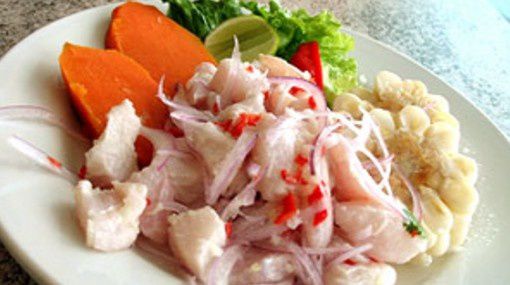
Ceviche from a Peruvian chef was named the tastiest dish in the world according to Chowzter.

There's no denying that Peruvian food is mouth-watering-ly delicious. However, if you eat out a lot, your pocketbook will take a hit. The average price for a good meal out is around S/.30, not including a beverage, which is around $12. It doesn't sound so bad, but considered in terms of local earnings, it's prohibitively expensive for a lot of people. And the high-end restaurants, including the two in the top twenty best restaurants in the world? They'll run you much more, so unless you're here on a fat expat package or practice law, stay away.

The other thing I miss about eating out in Lima is variety. There's one Thai restaurant in Lima, and luckily it's within walking distance! There's also one Indian place. But in general, the variety of ethnic restaurants that is so prevalent in the US simply doesn't exist here.

Oh, and I definitely can't deny that I really crave good, authentic pizza (very underwhelmed with most of the pizza here) and a good burger. What I'd kill for is a juicy burger topped with blue cheese, a side of sweet potato fries, and a kolsch.

Which brings us to...
Point: US, for variety, price point, and burgers (joking, except not really). This was a close one, but ultimately I miss being able to find specialty ingredients and being able to eat out without breaking the bank. I'm sure any Peruvians reading this will be scandalized, and I'm sure I'm going to get flak for this!

jueves, 15 de mayo de 2014

What's a Person Gotta Do to Get a Job Around Here?

I'm tired of being underemployed. I can say that far and beyond any other thing in Lima, the employment situation is the single most frustrating part for me and I'm guessing many other expats who come down without an expat package with a foreign company. It's one of the main reason expats leave: they're tired of teaching English, and they're tired of scraping by. Lima is either very cheap or very expensive depending on your employment situation. For English teachers, it's usually very expensive.

Now, having said that, I'm not starving and I have a flourishing social life. I spend more than is prudent on alcohol and eating out, although I do cook a lot, and my home is full of beautiful things. HOWEVER. I have a college degree, a teaching certification, and over three years' experience doing what I do, and I earn around $10 an hour teaching at institutes. This is pretty standard pay, although it doesn't seem to vary much with experience. Thankfully, I no longer have to schlep all over town like I used to, but institutes are not good to their teachers. There is no contract and no health insurance (I have private insurance now). According to Peruvian law, workers on contract are paid an extra salary in July and December, called gratificación. Institutes (and language departments of universities, by the way) will bend over backward to avoid paying this. It's a depressing situation.

Universities are no less exploitative, but the pay is better, and private students will pay double what you make at an institute. The dilemma with that is that you have to go all over town to their houses or businesses (see "schlepping" above).

And what if, gasp, you don't want to teach English? Well then my friend, you have got some pretty slim pickings. Most jobs for skilled workers, like engineers or geologists or technology experts, are hired from overseas. The jobs advertised locally in Peru are few for English speakers, and essentially none if you don't have a carné (residence permit). There are a few openings at the US Embassy, but I don't want to imagine the volume of resumes they receive. Full disclosure: I applied for two positions and still haven't heard back. I've got an interview on Friday for a company that hooks up qualified Peruvians (read: rich and fluent in English) for a seasonal work visa in the US. It was advertised as an "English interviewer" position, and I was thrilled at the prospect of not teaching English. Until, you guessed it, in the initial interview I was told they want to start an English program for culinary students whose English falls a bit short, and they need someone to design and teach the curriculum. So you see, it seems you just can't get away from it. :)

viernes, 11 de abril de 2014

Point/Counterpoint: Transportation in Peru vs. the US

All the blogs I follow have been writing posts like, "Top Ten Reasons Peru is Better Than the US" or "Ten Things I Miss From Home." It's interesting and entertaining to explore the differences between Peru and the US, but I want to do a more in-depth analysis. Besides, let's spread the fun out over more than just one post. So I decided to make Point/Counterpoint, where I compare one aspect life in Peru and the US, and award a point to one country. I don't know if I'm using the phrase "Point/Counterpoint" correctly, but who cares?

Today, I want to talk about something fundamental but often overlooked in travel guides and other discussions about places: public transportation. If you don't have a car, then this can affect your everyday life in a major way.

Transportation in Peru

"Public" transportation is a misnomer, since the bus companies here are actually competing private businesses. The city of Lima only has two public transportation systems, the Metropolitano bus line and the elevated train. They both get crowded during rush hour, but otherwise they're fantastic. The problem is that they cover a very limited range. But not to worry, for wherever else you need to go, there are a multitude of vehicles to get you there. You can get virtually anywhere in the city on a bus, unlike most US cities (cough Mpls/St. Paul).

El Metropolitano. Source: La Republica

Additionally, the buses are so plentiful that if you miss your bus, another will be along in less than 10 minutes. Add the fact that fares are based on how far you're going and you don't need exact change (there is a cobrador who collects the fare), and Peru is looking pretty good.

However, there are definite downsides. Buses here have a horrific track record when it comes to safety. Just this week, there were two separate news reports of bad accidents caused by irresponsible drivers. One of them ran over a pedestrian when the driver went up on the sidewalk to pass another bus. The other incident involved a crash of two small buses that left two dead and many others injured. Both drivers had over 12,000 soles ($5000) in unpaid fines. Because the companies are privately owned, they all participate in a suicidal race to be the fastest, claiming innocent victims along the way.

Source: El Comercio

That being said, if you know which buses and companies to avoid (and watch where you're walking), I don't feel that it's a whole lot less safe than anywhere else. I never get in the small combi vans or the mid-size buses you see in the picture, instead using the big buses that are generally much safer.

Other negatives include pollution from aging buses and a lack of handicap access.

Transportation in the US

Firstly, this analysis is drawn from a limited sample size of cities, since I've only lived in the Twin Cities, Ann Arbor, and San Francisco. Although there were some differences in their transportation systems, there are some generalizations to be made.

First, because the drivers have to go through a background check and safety rules are enforced, buses in the US are much safer than in Peru. They drive the speed limit, stop for pedestrians, and generally drive defensively. Additionally, because of the ADA, handicapped people are also able to use the buses. The buses are modern and for the most part clean, and many cities are using green technology to cut down on emissions.

My old friend, the SF Muni. Source: RentCafe.com

One downside is the fixed fare. If you are only going a short ways, this is kind of unfortunate. On the other hand, transfers can save you a lot of money if you are going a long ways or are just running a short errand. You do need to have exact change though, which means I've bought many packs of gum over the years. And I don't chew gum.

The other negative of public transportation in the US is that because it is public, it has a limited budget. The government simply can't afford to service all the areas of the city, or to have a bus show up every 10 minutes. Which means that sometimes, when it's below zero and you can see your breath, you need to wait a half hour for the bus and then walk 7 blocks to your destination. In the winter, that really sucks.

Overall, despite the poor safety record and other concerns, for me convenience wins the day. Point: Peru.

martes, 1 de abril de 2014

Quilca Book Market

This weekend Jorge and I ventured into Lima's historic district for a shopping trip. I love going to Lima Centro because the architecture is so striking, and the pace of life is completely different from other parts of Lima. There are food carts selling all kinds of things (eat at your own risk), street vendors selling everything from playing cards to screwdrivers, and all sorts of hole-in-the-wall stores selling amazing wares. Sadly, much of the district is dirty and the buildings are in disrepair. A few years ago, the city boarded up a much-loved theater and counterculture meeting place because the structure was deemed unsound.

Old-style architecture on Quilca boulevard

 Quilca boulevard is another beloved part of downtown, home to many secondhand and "informal" book markets and antique stores. I love reading fashion magazines and had been missing my fix since coming to Peru because magazines are prohibitively expensive here. In a bookstore, a current issue of Vogue goes for S/. 30! That's more than $8 and way more than I'm willing to pay. Even Peruvian magazines go for $6 and up. But the Quilca markets have outdated and secondhand magazines for as little as $1.


These shops aren't much to look at, but they have some fascinating things for sale. I saw Bill Clinton's memoir (in English), old Spanish language versions of Life magazine, vintage Penthouse magazines, and German erotica. I wasn't exactly looking for anything racy, however, so I headed for the stacks of back issues of fashion magazines. All in all, I got four magazines and Jorge got 2, all for under $15.


In between all the secondhand book markets, there are tiny antique stalls with really eclectic offerings. There were lots of old coins, some jewelry, and whatever else they thought might sell. My favorite was this troll wearing a Cusqueña beer shirt next to the Hulk fist.  This is why I love going downtown; you never know what you'll find!


domingo, 23 de marzo de 2014

(Don't) Feed the Birds

One of my favorite things about the area I live in is that every morning, I wake up to the sound of birds singing. In Lima, finding a quiet neighborhood is really difficult, so I consider myself very lucky. There are a lot of different birds, but one of them makes quite a unique sound and it's by far my absolute favorite: The only downside to having so many birds around is that sometimes they leave you an unwanted gift. We have no dryer, so all of the drying has to be done the old-fashioned way on a line outside, and it's almost guaranteed that every time there will be at least one thing has needs to be washed again. Oh well, a small price to pay in my opinion.

viernes, 21 de marzo de 2014

Renter's Remorse

Yesterday, after three consecutive days of cancellations, the plumber finally came and installed our new toilet. This was really exciting, because we had been flushing using the ol' bucket of water method since Saturday. And, we were kind of sick of looking at our beautiful new toilet still in its cardboard stacked right in the entrance. I'd post a picture, but really, that's kind of weird.

When we moved in back in October, the apartment was a mess and the bathroom was absolutely disgusting. The previous tenant had been living there three years, and I'm pretty sure he never cleaned it even once. We changed the sink because there was just no way to get the scum off, but the toilet was out of our budget then. Now, in my opinion these things are the landlady/owner's duty (I mean, at least hire a professional to clean things for crying out loud) but we sucked it up because we had no choice.

Last Saturday when the toilet broke, she hired a plumber to come take a look. He said he could fix it, but because the toilet was old and fragile, it would probably stop working again and there was a chance he might actually break the ceramic while fixing it. We discussed putting in a new toilet and she said that she'd put up half the money. Again, I think this is her responsibility and not the renters', but we agreed because we really couldn't handle that old toilet anymore. Since we didn't have any cash, we told her to take our part out of the security deposit. She handed us some money and we went that day to buy the supplies. When we went to settle up later, she told us that all the money was from our security deposit and we had to pay for the whole thing! Including the plumber's fee. She seems like a nice old lady but that's just out of line. I was so mad you could practically see the steam coming from my ears like in the cartoons. I know this sounds petty, but I no longer feel the need to be quite such a considerate renter. I'll play my music as loud as I like and I'm going to use all the water and electricity that I feel like. Maybe we'll invite people over and have a loud party. (Actually, our place is too small for that, but it's the idea of the thing.)

Anyway, now we have a beautiful new toilet that flushes, and we also had the guy install the new light fixture that we bought. (The landlady also said she'd pay for that since hers was from the 60s and the bulbs were burnt out, but surprise! She didn't.) Most plumbers here are also electricians and general all-around handymen. We went to shut off the power so he could change it, but the landlady's daughter, who is mentally ill, came running and shrieking ready to fight us, so we had to leave it on and the man changed the fixture with live current running through the wires!

 Sometimes I think Peruvians are insane. Another example: a friend locked herself out of her apartment at 10 at night. There were no locksmiths to be found at that time, so we asked her doorman if he knew of any way to break in. Her place has a laundry room facing the courtyard, and the windows were open. The only thing: she lives on the fourth floor. So he brings up a ladder and lays it across from the balcony to the laundry room window. We all look down and swallow. The ladder barely reaches across and is incredibly unstable. She thinks about going, climbs up to the ledge, and then climbs back down. Before we can blink, the doorman climbs up, takes one step on the ladder, and launches himself into the apartment. You can bet we gave him a stiff drink after that, and also a nice tip.

lunes, 10 de marzo de 2014

A Sad Goodbye

In my last post about the school, I was very hopeful about the school year. Unfortunately, my expectations and the reality were very different, and today I had to leave my job for health reasons.

What I should have realized before accepting the job is that teaching in an institute and teaching in an elementary school are very different beasts: in an institute with adults, you can spend most of the class seated, whereas with thirty children you have to always be on your feet, demonstrating, circulating, checking. With three 90-minute classes in a day, plus recess duty and miscellaneous other fetching and running back and forth, this amounts to a lot of time standing. For an average person, this would merely be tiring, but with my history of inexplicable back problems it has proved disastrous.

As far as the job goes, I am sorry to put the school in such a difficult position, especially so soon in the school year. I feel like I have let them, and myself, down. I will miss my colleagues, especially the other teachers in my department. There are some kids that I will remember fondly, and others that I won't lose any sleep over. I feel relieved, and sad, and embarrassed, all at the same time, and more than anything I wish that things were different.

domingo, 2 de marzo de 2014

La BioFeria: the Best Farmer's Market

You know the saying, "If you want something done right, do it yourself"? I guess a variation of that would be that if you can't find what you're looking for, make it yourself. Well, that's what a ton of expats have done down here. I spent a lot of last year missing products that I couldn't find here without realizing that they were here along, right under my nose! Now there are two brewpubs in Barranco, both run by expats. There is a delicious eco-friendly bakery in Chorrillos run by a German. Yesterday I went to the BioFeria in Miraflores, a kind of farmer's market, for the first time, and it was amazing. At least half of the booths were run by expats who felt a need for certain products and decided to do it themselves. I found all varieties of herbs and spices, natural lotions and shampoo, organic coffee and chocolate, delicious pastries, even sprouted nuts and seeds. My favorite find: heirloom cherry tomatoes. I have been missing those since I left the states and was ecstatic to find them down here at last. That and the goat cheese I bought made for the best salad I've had all year. Unfortunately, I don't have photos but I'm definitely going back next Saturday so I'll take some!